Residential vs Commercial Tile Installation: Key Differences
Written and Published by Plattenleger Pro | May 26, 2026
Plattenleger Pro is a professional tile installation company serving residential and commercial clients across Switzerland. This article draws on our direct experience delivering tiling projects across both sectors.
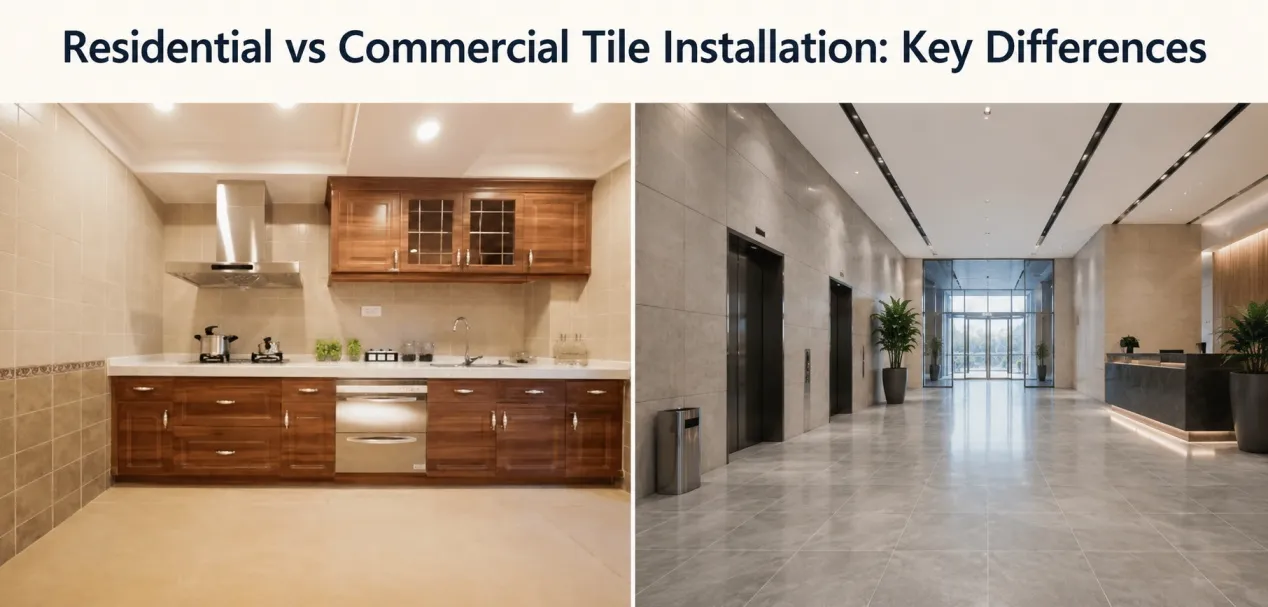
When most people think about tile installation, they picture a bathroom renovation or a new kitchen floor. And that's fair residential tiling, where most people encounter the craft. But tile installation in a commercial environment, a restaurant kitchen, a hotel lobby, a retail floor, a public building is a fundamentally different job in almost every way that matters.
Understanding those differences isn't just useful for contractors. It's useful if you're a property owner, a facility manager, or a business owner trying to understand why commercial tile work costs more, takes longer, and requires a different set of skills than a domestic renovation. It also helps you ask the right questions when choosing who to work with.
Here is a straightforward breakdown of where residential and commercial tile installation diverge and why each demands a specific approach.
1. The Scale and Scope of the Project
The most obvious difference is size. A residential bathroom might cover 8 to 15 square metres. A large kitchen renovation rarely exceeds 30 to 40 square metres. Even a full-home tiling project floors, bathrooms, and entrance hall, stays within a scale that one or two skilled tilers can manage comfortably within a defined timeframe.
Commercial projects operate on a completely different scale. A hotel lobby floor can run to hundreds of square metres. A restaurant kitchen, which must be fully tiled for hygiene compliance, covers not just the floor but every wall surface to ceiling height. A retail unit in a shopping centre can require thousands of square metres of consistent, precisely laid tile across a continuous open area.
That scale changes everything downstream: the equipment required, the number of workers needed, the logistical planning of material delivery, the phasing of tile installation to allow continued use of surrounding areas, and the time required from start to finish.
2. Traffic Load and Tile Specification
In a residential setting, tiles are typically exposed to light foot traffic from a household. The primary requirements are aesthetic appeal, ease of cleaning, and reasonable durability. Ceramic tiles, natural stone, and decorative porcelain all perform well in domestic environments where the load they carry is predictable and moderate.
Commercial environments are a different matter entirely. A supermarket floor carries thousands of footsteps per day, heavy trolleys, pallet jacks, and delivery equipment. A hotel corridor experiences continuous foot traffic from guests, cleaning staff, and luggage for years without interruption. A restaurant kitchen floor is subjected to dropped equipment, spilled liquids, grease, and heavy commercial appliances.
Tiles specified for commercial use need to meet entirely different performance standards. Slip resistance ratings measured as the R value in Switzerland and across Europe are significantly higher for commercial floors than domestic ones. Abrasion resistance must be rated for heavy traffic. In food preparation areas, tiles must be impervious, non-porous, and compatible with commercial cleaning chemicals at regular use frequency.
Selecting the wrong tile for a commercial environment doesn't just cause aesthetic problems; it creates safety risks and can result in expensive replacement within a few years.
3. Substrate Preparation Is More Demanding
In both residential and commercial tile installation, proper substrate preparation is the foundation that determines whether the finished work lasts. But the demands in a commercial environment are considerably higher.
Commercial buildings often have concrete subfloors spanning large areas. Those floors must be assessed for levelness across the entire surface; any variation beyond a very small tolerance causes lippage across large-format tiles, which is both a trip hazard and an aesthetic failure. In older commercial buildings, moisture management and floor levelling compound requirements can be significant.
In residential work, substrate preparation is still important, but the scale is smaller, the areas are more manageable, and the consequences of imperfect preparation, while still significant, are contained to a smaller area.
At Plattenleger Pro, we begin every project, residential and commercial, with a thorough on-site assessment before a single tile is specified or ordered. For commercial projects, that assessment is more extensive: we evaluate load-bearing requirements, check moisture readings across the full floor area, assess expansion joint requirements, and review any existing coatings that need removal before installation can begin.
4. Hygiene and Compliance Requirements
For residential tile installation, the primary compliance consideration is waterproofing in wet areas, ensuring bathrooms, showers, and wet rooms are properly sealed to prevent moisture penetration into the building fabric.
Commercial tile installation, particularly in the food service, healthcare, and hospitality sectors, involves a layer of regulatory compliance that has no equivalent in residential work. Restaurant kitchens in Switzerland must meet specific hygiene standards covering surface porosity, joint width, grout type, and the junctions between floor and wall surfaces known as coving, which prevent bacteria accumulation in corners.
Healthcare environments have even stricter requirements around non-porous surfaces, chemical resistance, and the elimination of any surface features that could harbour pathogens. Getting these details wrong isn't just a quality issue; it can result in failed hygiene inspections, operational shutdowns, and high remedial costs.
5. Working Hours and Disruption Management
A residential tile installation typically takes place in a home that the client vacates or manages around during a defined period. The project has a clear start and end date, and disruption, while inconvenient, is temporary and limited to the household.
Commercial tile installation frequently takes place in operational buildings. A hotel cannot close its lobby for two weeks. A supermarket cannot shut its entrance for a floor replacement. A hospital cannot take an entire wing offline for a renovation.
This means commercial tile installation work is often scheduled in phases, sections completed and cured before adjacent sections begin, or carried out during night hours, weekends, and periods of reduced building activity. That requires not just technical skill but project management capability: coordinating teams, managing material staging areas in live buildings, sequencing work to minimise operational disruption, and communicating clearly with facilities managers throughout.
6. Grouting, Sealing, and Long-Term Maintenance
In residential settings, standard cement-based grout works well in most applications and is straightforward to maintain. In commercial environments, particularly in food service, healthcare, and high-traffic public areas, epoxy grout is typically specified instead. Epoxy grout is non-porous, chemically resistant, and significantly harder-wearing than cement-based alternatives. It is also more difficult to work with and more expensive, which is why it is largely absent from residential projects where it is simply not necessary.
Sealing requirements in commercial settings are also more stringent. Natural stone in a hotel or restaurant lobby needs to be sealed to a commercial standard and maintained on a schedule that reflects the volume of traffic it receives, not the occasional residential re-seal that a domestic natural stone floor might need every few years.
Choosing the Right Tile Installation Partner
Understanding these differences makes one thing clear: not every tile installer is equipped to handle both residential and commercial work to the same standard. A skilled residential tiler who produces beautiful bathroom renovations may not have the project management experience, the technical knowledge of commercial specifications, or the team capacity to take on a large commercial installation effectively.
At Plattenleger Pro, we work across both sectors in Switzerland, from residential bathroom and kitchen renovations in Zurich, Geneva, Basel, and Lausanne, to commercial tiling projects in restaurants, hotels, retail environments, and public buildings. Our approach to both starts the same way: an on-site consultation, an honest assessment of what the project requires, and a clear proposal that reflects what the work actually involves.
Whether you are renovating a single bathroom or specifying tile for a commercial facility, getting the specification and the installation right the first time saves significantly more than the cost of doing it wrong.
Recent Posts
-
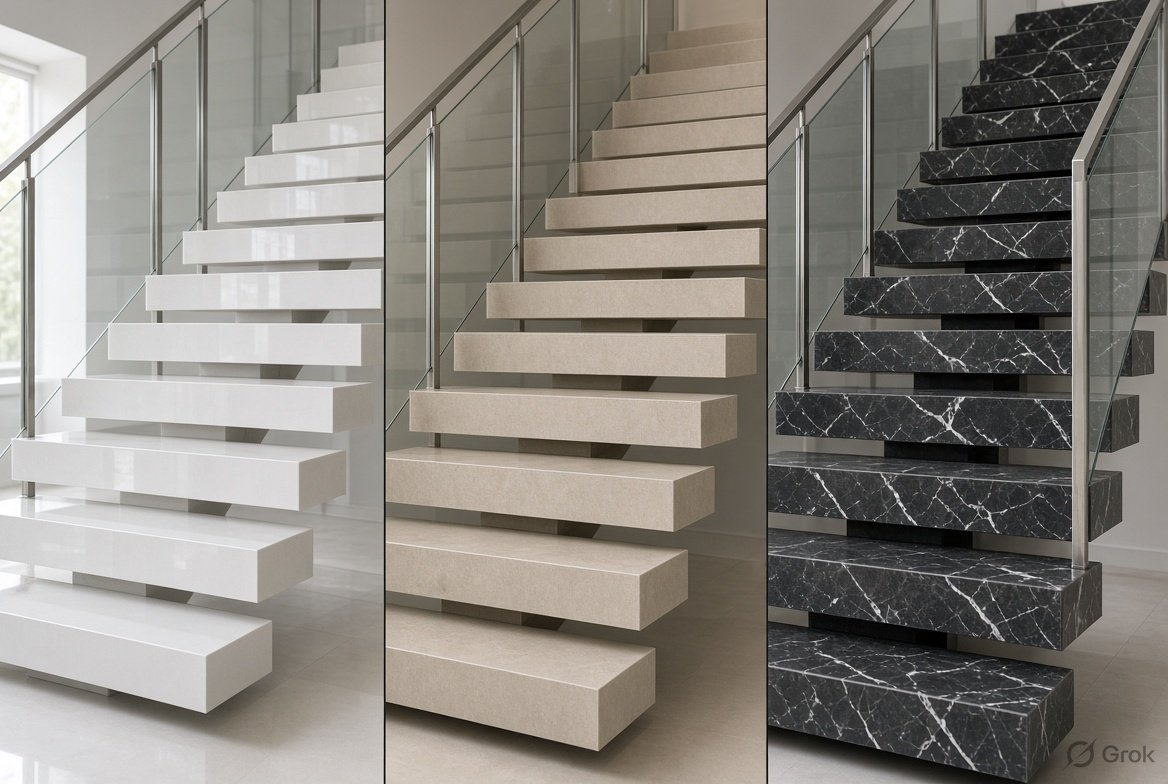
Porcelain vs Ceramic vs Natural Stone Tiles for Stairs: Which Is Best?
Oct 08, 2026 -
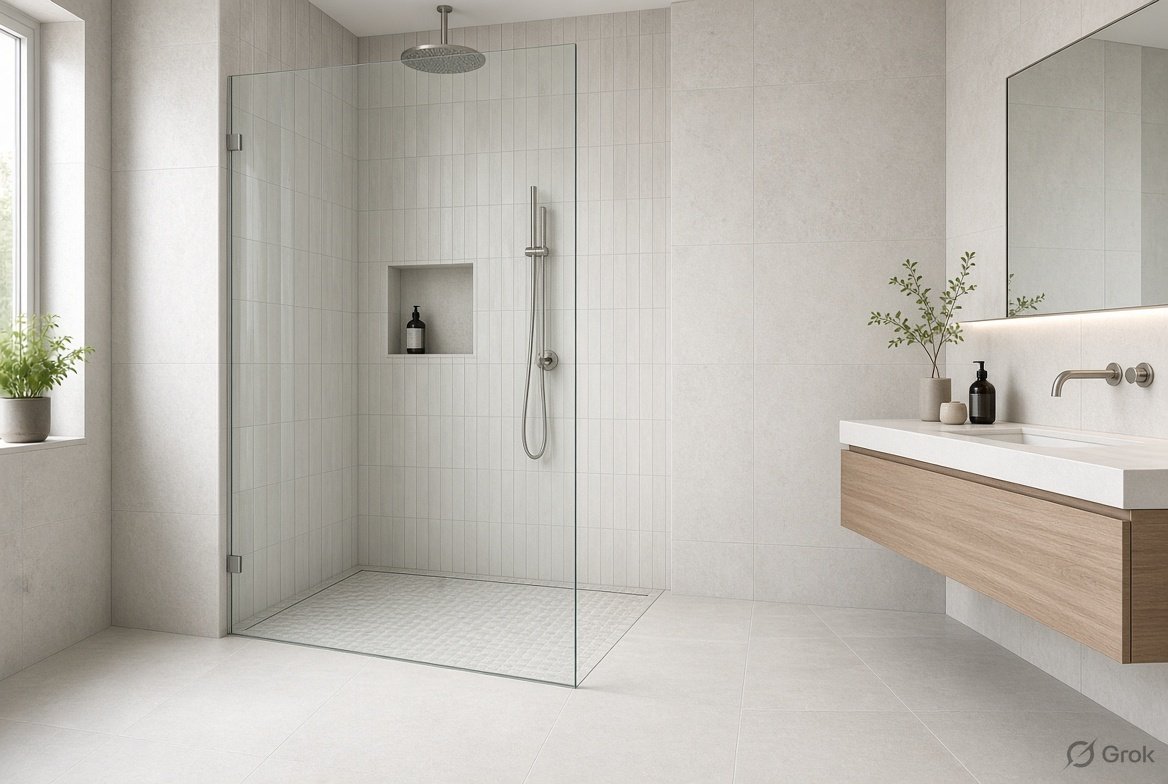
Best Shower Tile for Small Bathrooms: 9 Options That Make the Space Look Bigger (2026 Guide)
Sep 28, 2026 -
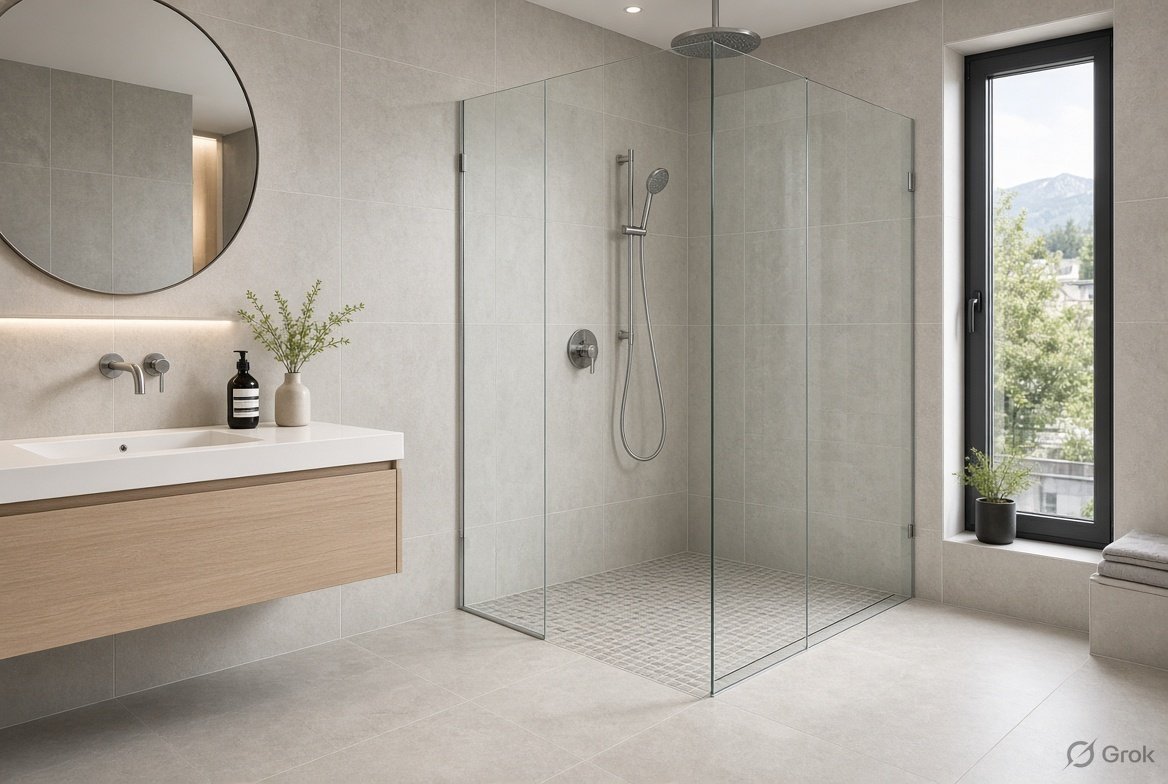
Bathroom Renovation in Switzerland: How Choose the Right Tiles
Sep 28, 2026 -
Outdoor Terrace Tile Installation in Switzerland: Choosing the Right Tiles for Swiss Weather
Sep 03, 2026 -
How to Choose the Right Plattenleger in Switzerland: A Complete Guide
Aug 27, 2026