Bathroom Tile Installation Guide: Best Tiles, Layouts & Finishes
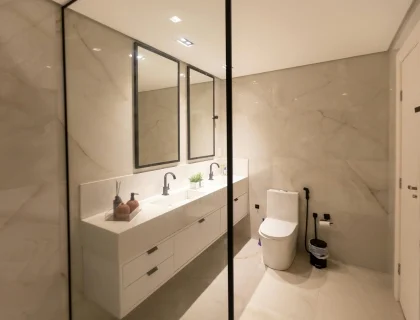
Forget the showroom lighting for a second. You need to think about how these Bathroom tiles live with you.
- Porcelain is the MVP: Ceramic is fine for a backsplash, but for a bathroom floor? Go for porcelain tiles. It’s fired at higher temperatures, making it nearly glass-like in its water resistance. It’s tough as nails.
- The Zellige Craze: You’ve seen those shiny, uneven tiles on Pinterest. They’re beautiful, but because they aren't flat, they are a nightmare to grout and even harder to clean. If you're a neat freak, stick to something with straight edges.
- Stone: Marble is gorgeous until you drop a bottle of hair dye on it. It’s porous. If you aren't prepared to change it every single year, buy a "marble-look" porcelain instead.
Finishes: Don't Slip Up
The tile finish determines whether your bathroom is a spa or a skating rink.
- Gloss: Great for walls. It bounces light around and makes the room feel airy. On the floor? It’s a big no. If a little water splashes out of the tub, the glossy tile becomes slippery.
- Matte: This tile will be your best friend. It has a natural grip and doesn't show water spots or pieces of lint.
- Lappato: This has a "semi-polished" finish. You get a bit of sparkle without the "Banana Peel" sliding effect. Lappato tile is perfect for the middle ground for 2026.
Layouts: Playing with Perspective
You don't need expensive tiles to have a high-end bathroom; you just need a smart bathroom tile installation service.
- Vertical Stack Bond: Instead of offsetting your tiles like bricks, stack them directly on top of each other vertically. It feels incredibly modern and makes short ceilings seem much higher.
- The "Rule of Three": Try not to mix more than three different types of tile in one bathroom. Usually, one floor tile, one main wall tile, and one "wow" feature tile (like in the shower niche) is the sweet spot.
- Grout Lines: Use a grout color that matches your tile as closely as possible. It hides imperfections in the tiling job and makes the whole surface look like one solid piece of stone.
Why a Professional Bathroom Tile Installer Is Worth Every Penny
If you’re hiring a professional instead of bruising your own knees, you want to make sure you’re getting the craftsmanship you paid for. A true pro tile installer doesn't just "slap" tile down; they treat it like a puzzle. Here are three things to expect during a professional tile installation process:
They Obsess Over the "Centerline"
A pro won’t just start tiling in a corner. You’ll see them spending the first hour with a laser level and a tape measure, snapping chalk lines and dry-laying pieces. They are calculating the layout so that when they reach the corners, the cuts are perfectly symmetrical. If they’re thinking three moves ahead, you’re in good hands.
The "Click" of a Leveling System
If you see your installer using those little plastic clips and wedges between every tile, get excited. That means they care about "lippage" (one tile sitting higher than another). It shows they are committed to a floor so flat you could slide a credit card across it without it catching.
They Talk About "Cure Times"
A great tile installer won't rush. If they tell you, "I know you want to use the shower, but you need to wait 72 hours for the grout to fully cure," that’s a sign of integrity. They’d rather you be slightly inconvenienced now than have a phone call in six months about crumbling grout or leaking seals.
Solving the Common Headaches
"Do I really need to take the toilet out?"
Yes. Don't tile around the toilet. It looks terrible, and when you eventually have to replace that toilet, the new one won't fit the "cutout" you left in the tile. Pull the porcelain, tile the floor, and reset the toilet on top.
"What's the deal with 'Rectified' tiles?"
Rectified tiles have been mechanically cut to be perfectly square. This allows for those tiny, 1.5mm grout lines. Non-rectified tiles have rounded edges and require thicker grout lines to look decent.
"My grout is turning orange/brown. Why?"
It’s likely iron in your water or mold growing in the pores of cement grout. This is why Epoxy Grout is the best for bathroom tile installation. It’s more expensive and a bit harder to spread, but it’s basically plastic once it dries. Nothing gets inside the Epoxy Grout.
"Can I use those peel-and-stick tiles just to save some cash?"
If you’re living in a rental and just want to hide an ugly floor for six months, peel-and-stick tiles are fine. But in a high-moisture environment like a bathroom? It’s a disaster waiting to happen. The steam eventually eats the adhesive, the edges start curling up, and water gets trapped underneath, creating a ground for mold. If you’re on a budget, buy the cheapest porcelain you can find and spend your money on a high-quality grout and get your bathroom tile installation done by a professional. It’ll look better and last twenty years longer than a sticker.
"Should I tile all the way to the ceiling, or is that overkill?"
It’s definitely an investment, but "floor-to-ceiling" tile is the single best way to make a bathroom look expensive. When you stop the tile halfway up the wall, it creates a horizontal line that "chops" the room in half, making it feel smaller. Taking the tile all the way up eliminates that break and makes the bathroom ceiling feel like it’s floating. Plus, you’ll never have to worry about splashing water on drywall and dealing with peeling paint ever again.
"What’s the actual difference between 'Cheap' and 'Expensive' bathroom tile?"
Sometimes it’s just the brand name, but usually, it comes down to the "print." Cheap porcelain tiles often have a repetitive pattern; you’ll see the same marble vein on every fourth tile, which screams "fake." High-end bathroom tiles have more "variation," meaning they have 20 or 30 different faces, so no two tiles look alike. Also, cheaper tiles are often slightly warped (cupped). When you try to lay them, the centers stick up higher than the corners, leaving you with a floor that feels like a topographic map, but the expensive bathroom tiles stay flat and give a rich look.
Recent Posts
-
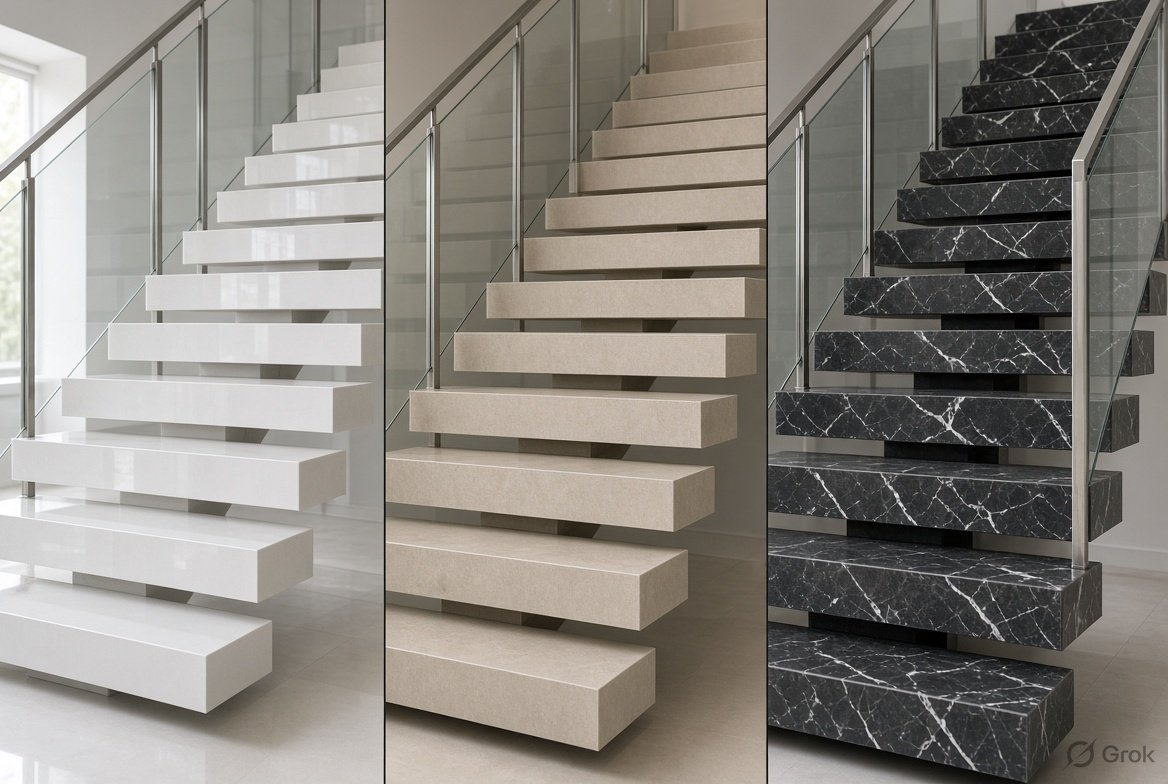
Porcelain vs Ceramic vs Natural Stone Tiles for Stairs: Which Is Best?
Oct 08, 2026 -
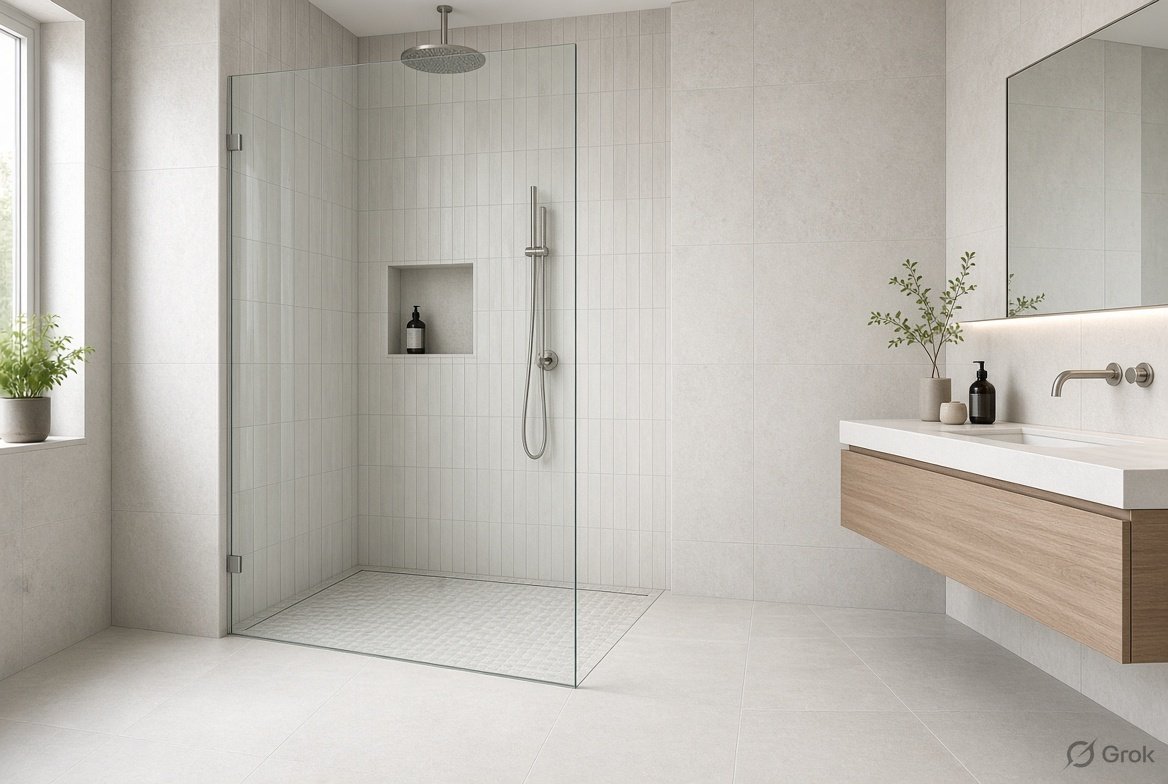
Best Shower Tile for Small Bathrooms: 9 Options That Make the Space Look Bigger (2026 Guide)
Sep 28, 2026 -
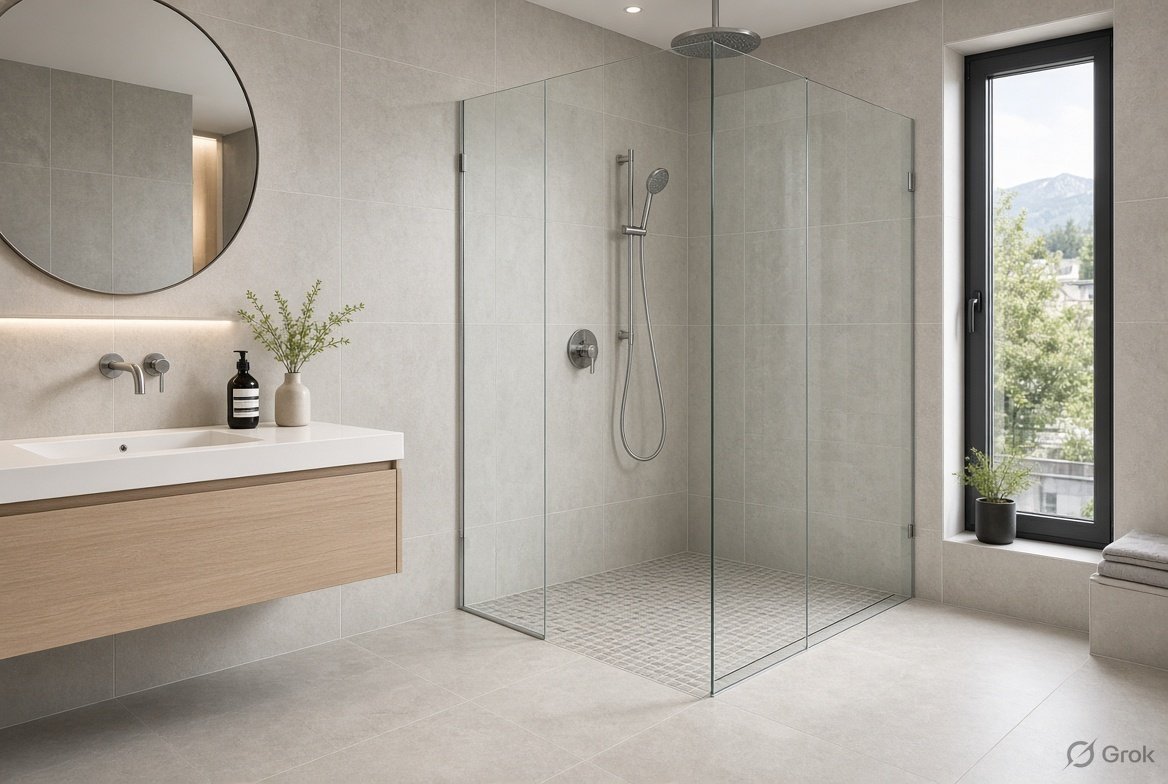
Bathroom Renovation in Switzerland: How Choose the Right Tiles
Sep 28, 2026 -
Outdoor Terrace Tile Installation in Switzerland: Choosing the Right Tiles for Swiss Weather
Sep 03, 2026 -
How to Choose the Right Plattenleger in Switzerland: A Complete Guide
Aug 27, 2026