Large Format Tiles vs Standard Tiles: What Works Best?
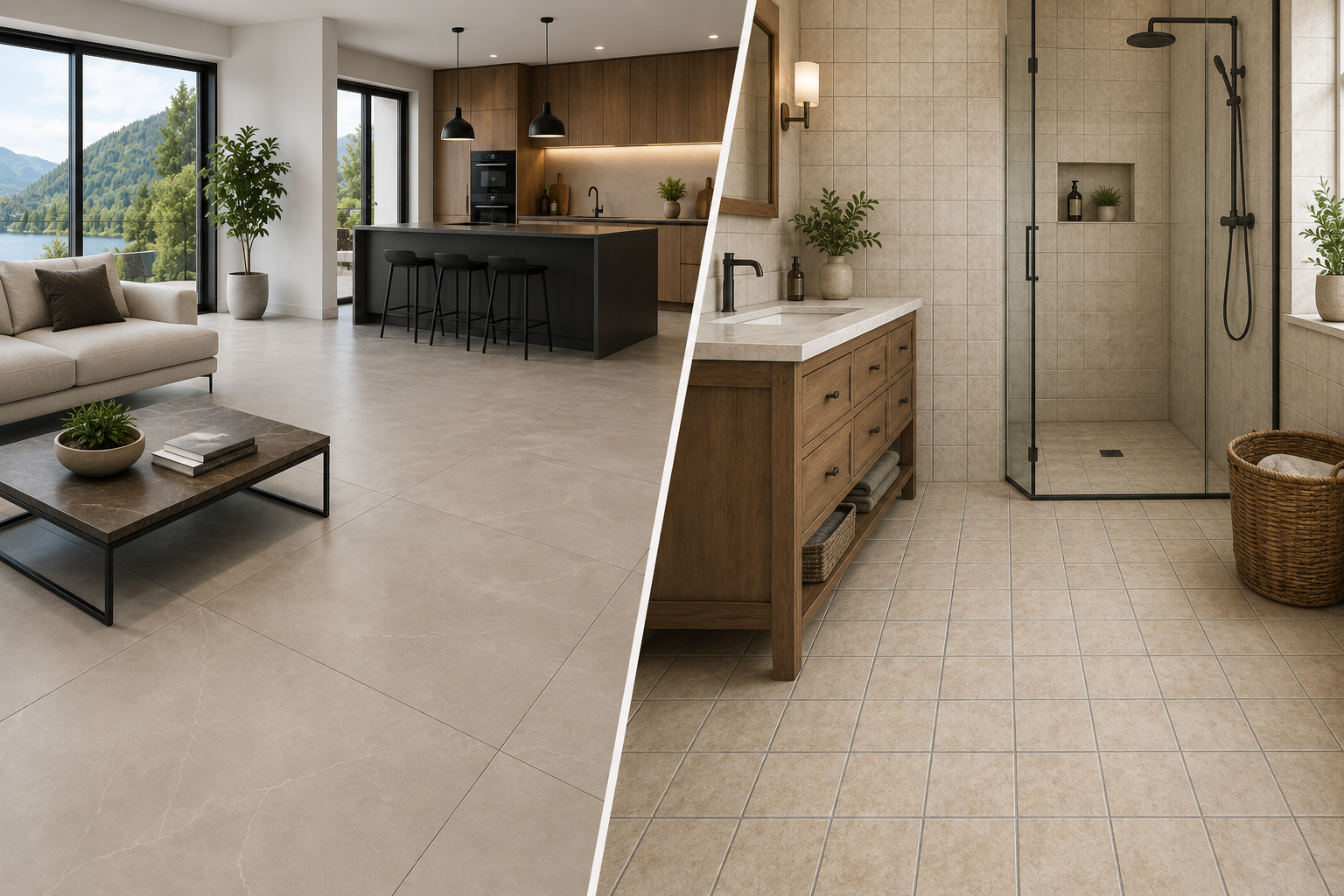
Choosing a tile size sounds like a minor decision but its not. Tile size affects far more than appearance. It changes how a room feels, how much work goes into installation, how easy the space is to clean for years afterward, and how much the project costs from start to finish.
At Plattenleger Pro, we see this exact decision play out on job sites across Switzerland, from compact apartment bathrooms in Zurich to open-plan kitchens and outdoor terraces. This guide walks through how large format and standard tiles compare, room by room, so you can choose the option that actually fits your space rather than just the one that looks best on Instagram.
What Counts as Large Format vs Standard Tiles?
There's no official rulebook here, but the industry generally agrees on a rough dividing line.
Large format tiles are typically 60x60 cm or bigger, and this category now includes oversized porcelain slabs that can run 120x240 cm or more. Standard tiles usually fall between 30x30 cm and 45x45 cm, the size most Swiss homes were originally built and renovated around.
Quick answer: Large format tiles are generally 60x60 cm and up, including large slabs. Standard tiles typically range from 30x30 cm to 45x45 cm. Beyond size, the biggest practical difference is grout line frequency, which shapes both the look of a room and how much cleaning it needs.
The size difference sounds simple, but it's the reason everything else on this list ends up different:
- Cost.
- Installation.
- Maintenance.
- Room vibes.
Large Format Tiles: What You Gain and What You Give Up
The advantages
Large format tiles have become popular for good reason. Fewer grout lines mean the floor or wall reads as one continuous surface, which gives rooms a cleaner, more contemporary look. This is part of why large format tiles show up so often in modern bathroom and kitchen renovations.
Fewer grout lines also mean less grout to clean, and fewer narrow gaps where dirt and grime tend to collect. In a small bathroom, this uninterrupted surface can genuinely make the room feel more open, since your eye isn't tracking a grid of lines across the floor.
The trade-offs
None of this comes free. Large tiles are heavy and tough to handle, which means installation takes real skill. This isn't the kind of job suited to a rushed weekend project. The subfloor also needs to be properly flat before large format tiles go down, because even a small dip that a standard tile would hide can show up as an uneven edge or a hollow spot under a large slab.
Cutting large tiles around drains, pipes, or tricky corners produces more waste than cutting smaller ones, since a mistake means discarding a much bigger and more expensive piece of material. All of this adds up: large format tiles generally cost more per square metre in both material and labour. Proper subfloor preparation matters more with large format work than with almost any other stage of the job, which is where experienced installation makes a real difference to how the finished floor performs over time.
Standard Tiles: What You Gain and What You Give Up
The advantages
Standard tiles remain the more forgiving option, particularly on older subfloors that aren't perfectly level. They're faster to install, which usually keeps labour costs down, and they come in a far wider range of patterns, colours, and price points since they've been the industry default for decades.
They're also the more practical choice for tight, irregular, or heavily cut-up spaces. A small bathroom with not so good layout, or a staircase with narrow treads, is usually easier and cheaper to tile with a standard size than to force a large format tile into a space it wasn't really designed for.
The trade-offs
More tiles mean more grout lines, and more grout lines mean a busier visual pattern and more surface area to clean over time. Grout itself can wear down or discolour faster than the tile around it, particularly in high-moisture areas like showers, and a room tiled in a smaller format can feel more visually broken up or segmented than one finished in large format.
Comparing Both by Room
Tile size decisions happen room by room, based on the size, shape, and function of that specific space.
Bathrooms: Large format tiles work well in bigger bathrooms and walk-in showers, where there's enough surface area to let the material do its job without excessive cutting. In small or awkwardly shaped bathrooms, standard tiles are often the more practical and cost-effective choice, since cutting large slabs down to fit odd corners wastes both material and money. If you're planning a bathroom renovation, it's worth measuring the space carefully before deciding.
Kitchens: On kitchen floors, large format tiles cut down on the grout lines that tend to collect grease and food debris over time, which makes daily cleaning noticeably easier. Standard tiles remain a solid and budget-friendly option for kitchen backsplashes, where the smaller working area suits a smaller tile anyway.
Outdoor patios and terraces: Large format porcelain pavers have grown popular for outdoor spaces because fewer joints mean fewer gaps for weeds to take hold and less debris collecting between tiles. That said, standard tiles can be the more practical choice on uneven outdoor bases where a large slab is more likely to rock or crack under pressure. Our outdoor patio team can assess your base before recommending a size.
Staircases: This is one area where we'd steer most clients toward standard or smaller tiles. Large slabs are genuinely difficult to cut precisely enough for stair nosing and risers, and a poor cut on a stair edge is both a visual flaw and a safety issue. If you're working on a staircase project, standard sizing is usually the safer route.
What Each Option Actually Costs?
Cost is where a lot of homeowners get surprised, in both directions. Large format tiles usually carry a higher price per square metre for the material itself, and the labour cost per square metre tends to be higher too, since installation takes longer and requires more precision.
It's worth remembering that fewer tiles doesn't automatically mean fewer francs spent. Handling costs, subfloor preparation, and cutting waste can offset some of the material savings people expect from buying "fewer, bigger" tiles.
Quick answer: Large format tiles typically cost more overall due to higher material prices, more skilled labour, and greater cutting waste. Standard tiles remain the more budget-friendly option for most renovation projects.
If budget is a firm constraint on your project, it's worth getting a quote for both options before committing, since the difference can be more significant than expected depending on room layout.
Installation and Long-Term Maintenance
Large format tiles need a properly flat substrate, a technique called back-buttering to ensure full adhesive coverage, and often two installers working together just to lift and place each piece safely. A poorly installed large format tile is more likely to crack or hollow underneath than a small one laid the same way.
Standard tiles are more forgiving both during installation and later on. If one cracks, replacing a single small tile is a quick, low-cost fix compared to sourcing and cutting a matching large format piece.
On the maintenance side, fewer grout lines on large format tiles generally mean less scrubbing and a lower risk of grout discolouration over the years. Standard tiles, while needing more regular grout attention, are easier to spot-repair one section at a time without disturbing the rest of the floor.
How to Decide: A Simple Framework
If you're still weighing the two, run through these five questions before you order any material.
- Measure your room.
- Check your subfloor.
- Set a realistic budget.
- Decide on the look you want.
- Think about long-term upkeep.
Frequently Asked Questions
Are large format tiles harder to install than standard tiles?
Yes. They require a flatter subfloor, more precise levelling, and often two people to lift and place them safely, which is why professional installation matters more with large format tiles than with standard sizes.
Do large format tiles make a small room look bigger?
Generally, yes. Fewer grout lines create a more continuous surface, which can make a small bathroom or kitchen feel more open than the same room tiled in a smaller format.
Are standard tiles cheaper than large format tiles?
In most cases, yes. Both material and labour costs tend to run lower for standard tiles, though the exact difference depends on the quality and finish of the tile you choose.
Which tile size is better for outdoor patios?
Large format porcelain pavers are popular for patios because fewer joints mean less weed growth and easier cleaning. Standard tiles can still be the more practical choice on uneven outdoor bases.
Can large format tiles be used on stairs?
It's generally not recommended. Standard or smaller tiles are safer and easier to cut precisely for stair edges and risers, which reduces the risk of an uneven or unsafe finish.
Which Should You Choose?
If you're still not sure which size fits your project, our team at Plattenleger Pro can assess your space and walk you through the options in person. Get in touch for a free quote and we'll help you land on the size that actually works for your home.
Recent Posts
-
Porcelain vs Ceramic vs Natural Stone Tiles for Stairs: Which Is Best?
Oct 08, 2026 -
Best Shower Tile for Small Bathrooms: 9 Options That Make the Space Look Bigger (2026 Guide)
Sep 28, 2026 -
Bathroom Renovation in Switzerland: How Choose the Right Tiles
Sep 28, 2026 -
Outdoor Terrace Tile Installation in Switzerland: Choosing the Right Tiles for Swiss Weather
Sep 03, 2026 -
How to Choose the Right Plattenleger in Switzerland: A Complete Guide
Aug 27, 2026