Underfloor Heating and Tiles: How to Choose the Right Tiles for Heated Floors
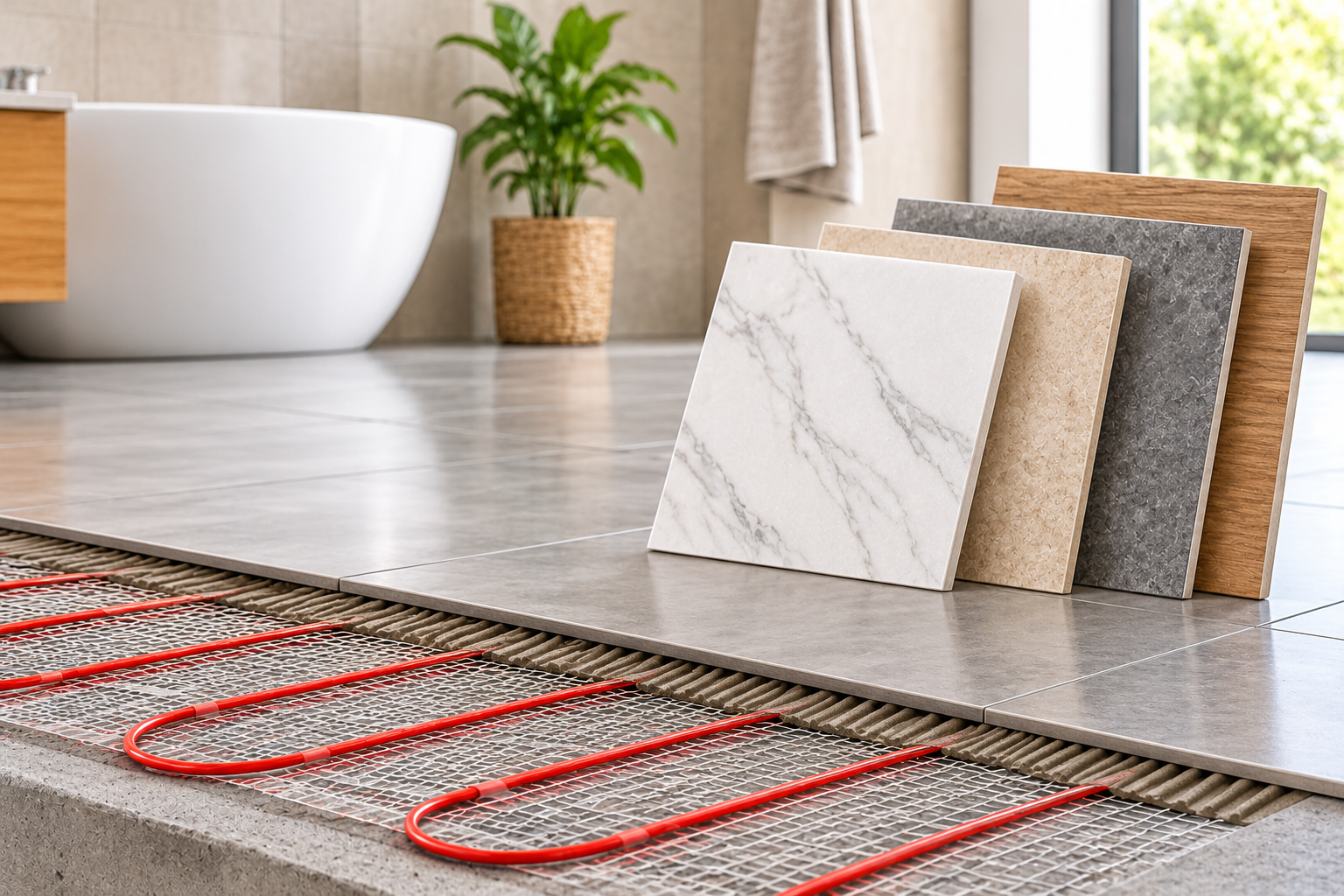
Tiles for underfloor heating have to do more than look good. They carry heat from the system below into the room, so the material, thickness, adhesive and installation all affect how the floor performs. A poor combination can mean uneven warmth, slow heat-up or cracked tiles. This article explains which tiles work well on heated floors, what to check before you buy, and why careful installation matters, whether you are retrofitting tiles or planning a new floor.
Are Tiles a Good Choice for Underfloor Heating?
Yes. Tiles are one of the most common finishes over heated floors because they conduct heat well and tolerate warmth without deforming. Heated tile flooring also holds its warmth after the system switches off, so the surface cools gradually. That suits kitchens, bathrooms, hallways and living areas alike.
The tile is only one layer, though. Performance also depends on the insulation beneath the heating, the heating design, the adhesive and the overall floor construction. A good tile on a poorly prepared base will not give good results.
Best Tiles for Underfloor Heating: Which Materials Should You Choose?
No single material is the best choice for every home. These are the main options.
Porcelain tiles
Porcelain is dense, durable and absorbs very little water. It passes heat through readily, which is why porcelain tiles for heated floors are so widely used. They suit busy rooms and wet areas, and they cope well with repeated heating and cooling. Always check that the specific product is approved for use with underfloor heating.
Ceramic tiles
Ceramic tiles also transfer heat well and come in many finishes and styles. They are a sound choice for most residential interiors. They are generally more porous than porcelain, so check the product’s rating before using them in high-moisture or high-wear areas.
Natural stone tiles
Slate, granite and limestone can all be used over heating, but they do not behave alike. Slate and granite usually conduct heat well, while softer stones such as limestone vary and often need sealing and more careful maintenance. Ask the supplier whether the exact stone is suitable for heated floors, since some react more to temperature change.
What Should You Consider When Choosing Tiles for Heated Floors?
Tile thickness. Thinner tiles tend to warm up a little faster, while thicker ones take longer to heat but hold warmth longer. Thicker is not automatically better or worse. The overall build-up matters more than thickness alone.
Thermal conductivity. Materials differ in how easily they pass heat. Ask your supplier or installer how the tile compares, rather than assuming.
Size and layout. Large-format tiles mean fewer joints but demand a very flat subfloor and correctly placed movement joints.
Surface finish. A textured or slip-resistant finish matters in bathrooms and kitchens, where floors get wet.
Adhesive and grout. Both should be flexible and rated for use over underfloor heating.
Manufacturer guidance. The tile, adhesive and heating system makers may each have requirements. Follow all of them.
Subfloor condition. It should be clean, level, stable and dry before any tiling begins.
Installing Tiles Over Underfloor Heating: What Matters?
Requirements differ between electric and water-based systems and between products, so treat this as a general outline rather than a set of instructions.
Before tiling, the heating system should be checked and confirmed to be working. The subfloor then needs to be prepared and levelled, since gaps or uneven areas can cause hollow spots and cracking later. Flexible adhesive and grout suited to heated floors should be used, and movement joints placed according to the manufacturer’s recommendations.
Curing is the step people most often rush. Adhesive and screed need the time specified by their manufacturers before the heating is switched on, and the heating system usually needs a staged start-up rather than going straight to full temperature. Skipping this can damage the floor, so follow the instructions supplied with each product and the heating system.
Why Choose Professional Tile Installation for Heated Floors?
Heated floors leave less room for error than standard tiling. An experienced installer can help you avoid the usual problems by:
- matching tile material to your heating system and room
- preparing and levelling the surface properly
- choosing compatible adhesive and grout
- placing and spacing tiles accurately
- finishing edges and joints carefully
- working to the heating system’s requirements
Plattenleger Pro offers tiling work for homes, and a Home Interior service can bring tile selection and installation together in one project. Discussing your heating system at the planning stage lets the right questions be asked before any tiles are bought.
Choose the Right Tiles for Your Heated Floors
Porcelain, ceramic and suitable natural stone tiles can all work with underfloor heating when the whole floor is designed and installed correctly. Check thickness, conductivity, finish, adhesive and subfloor, and follow manufacturer guidance throughout.
For help with selection or installation, explore the services at Plattenleger Pro or get in touch to discuss your tiling project.
Recent Posts
-
What Is Included in Home Interior Tile Installation Services?
Nov 12, 2026 -
Terrace Renovation: When Should You Replace Old Terrace Tiles?
Oct 27, 2026 -
How to Choose the Best Outdoor Tiles for Your Terrace
Oct 26, 2026 -
Replacing Carpet or Wood Stairs With Tiles: Is It Worth It?
Oct 19, 2026 -
Porcelain vs Ceramic vs Natural Stone Tiles for Stairs: Which Is Best?
Oct 08, 2026