Replacing Carpet or Wood Stairs With Tiles: Is It Worth It?
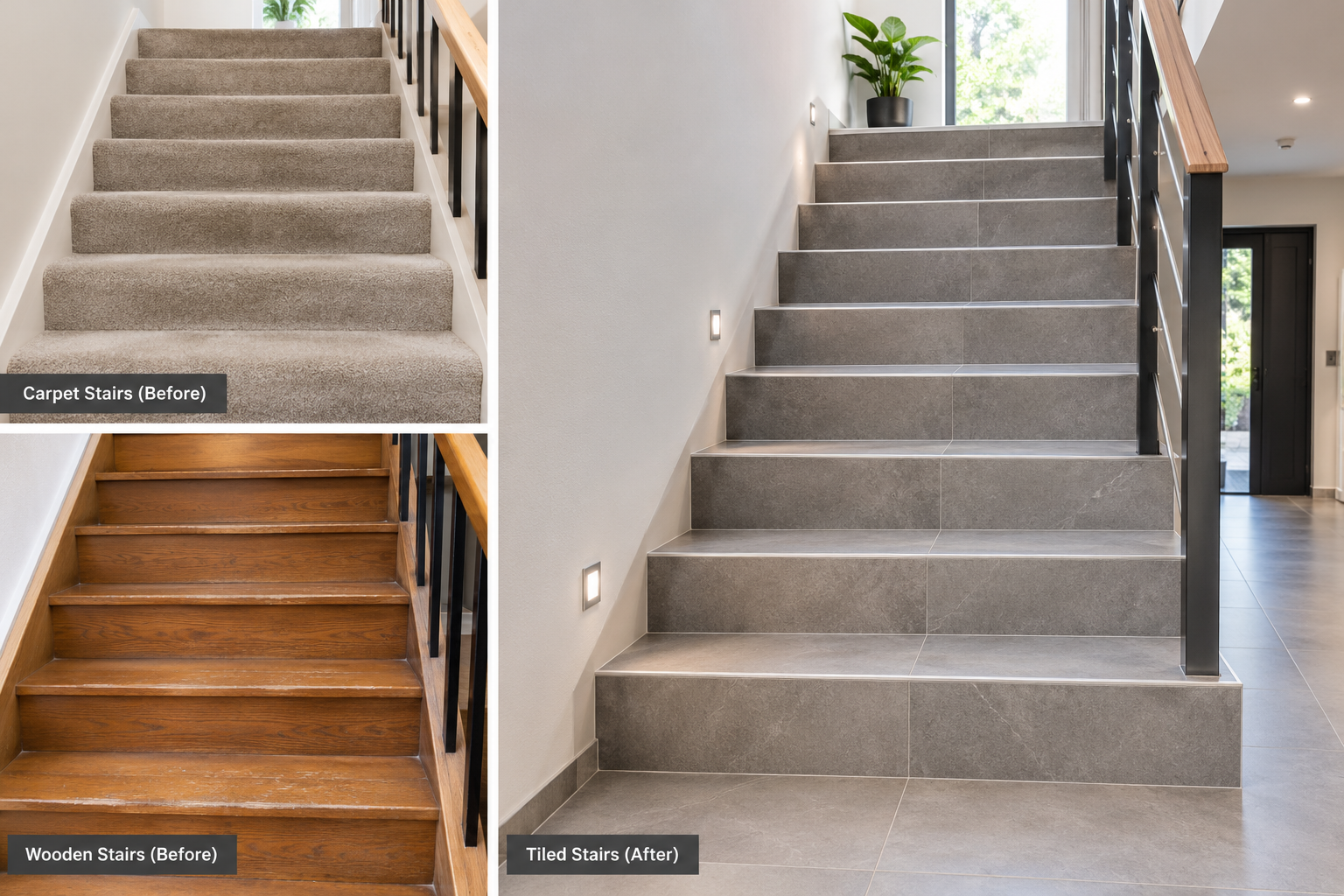
Stairs take more wear than any other part of a home. Shoes, bags, pets and laundry baskets cross the same few centimetres of every step, every day. If your carpet is flat and stained, or your wooden treads are scratched and loose, tiles are a reasonable option to consider. At Plattenleger Pro, staircase tile installation in Switzerland is a regular part of our work, so here is an honest look at when it makes sense and when it does not.
Can You Replace Carpet on Stairs With Tile?
Yes, in most homes you can convert carpeted stairs to tile. The carpet, underlay and tack strips come off first. Then we check what is underneath.
Concrete stairs are the easiest case. After cleaning and leveling, tiles go straight on. Wooden stair frames need more attention, because they must be stiff enough to carry tile without flexing. If the treads bounce or squeak, we reinforce them before any tile is laid.
Can You Tile Over Existing Wooden Stairs?
Sometimes. Tiling over wooden stairs works only when the structure is solid. Wood expands and shrinks with humidity, while tile and rigid adhesive do not move. Without the right preparation, you get cracked tiles and loose edges within a year or two.
A proper job uses a decoupling membrane or cement backer board, plus a flexible adhesive. Both let the wood move slightly without passing that movement into the tile.
Height is the second issue. Tile and adhesive add roughly 10 to 20 mm to each step. Every riser has to end up the same height, because uneven steps cause falls and can fail inspection. On a staircase with a fixed top or bottom landing, this needs measuring before you order anything.
Tiled Stairs vs Wooden Stairs
Durability
Porcelain stoneware tile resists scratches, dents and moisture far better than timber. Wood can be sanded and refinished, but heavy traffic and grit will mark it again.
Maintenance
Tile needs a damp mop. Wood needs oiling or varnishing every few years.
Comfort
Wood feels warmer and softer underfoot. The tile is cold unless you have underfloor heating or wear slippers.
Noise
Tile is louder, especially in a stairwell that carries sound through the house.
Look
Wood suits a classic or rustic interior. Tile gives you clean lines, and you can match the stairs to the hallway floor for a continuous finish.
Tiled Stairs vs Carpet
Are tiled stairs better than carpeted stairs? For hygiene and lifespan, usually yes. The carpet holds dust, pet hair and allergens, and it wears out visibly on the front edge of each step. Tile does not absorb anything and can last for decades.
Carpet wins on softness and sound. It is also more forgiving if a child or an older person falls. If anyone in your household has balance problems, think carefully before choosing a hard surface. Slip resistance matters here, and it is covered below.
Is It Worth Replacing Wooden Stairs With Tiles?
It is worth it if:
- Your stairs are heavily used and the wood keeps showing damage
- You have pets or young children and want a surface that cleans easily
- You are renovating the hallway and want a matching floor and staircase
- You plan to sell and want a low-maintenance, durable finish
It is probably not worth it if:
- The wood is in good condition and you simply want a change
- The stair frame is weak and would need major structural work
- Your household is sensitive to noise and cold floors
The tile costs more than a new carpet, and the price depends on the tile, the stair shape and how much preparation is needed. Curved or winder stairs take longer because every tile is cut by hand. A quote after an on-site visit is the only reliable way to get a number.
What a Staircase Renovation With Tiles Involves
- Site visit and measurements. We check the structure, riser heights and tile options.
- Removal. Old carpet or damaged wood covering comes off.
- Preparation. We repair and level the steps and add a membrane or backer board where needed.
- Tiling. Treads, risers and edges are cut and set with suitable adhesive.
- Grouting and sealing. Joints are filled and the stair edge is finished with a profile.
- Curing. The stairs stay out of use until the adhesive has set, which is usually a day or two.
Choosing Tiles for Stairs
Do not pick a polished tile because it looks good in a showroom. Stairs need a slip-resistant surface, and a matte or structured finish is safer, especially in an entrance where wet shoes are common. Ask your tile installer about the slip rating of the tile you are considering.
Stair nosing is the other detail that matters. A metal or ceramic edge profile protects the front of each step from chipping and helps people see where each step ends. Skipping it is a common mistake that shows up later as broken corners.
Ready to Renovate Your Stairs?
Replacing carpet or wooden stairs with tile is a good long-term decision when the structure is sound and the right materials are used. If you are unsure whether your stairs can take tile, we will look at them and tell you plainly.
Contact Plattenleger Pro for a free consultation on your staircase tile installation in Switzerland. We will measure, advise on tile choices and give you a clear quote.
Recent Posts
-
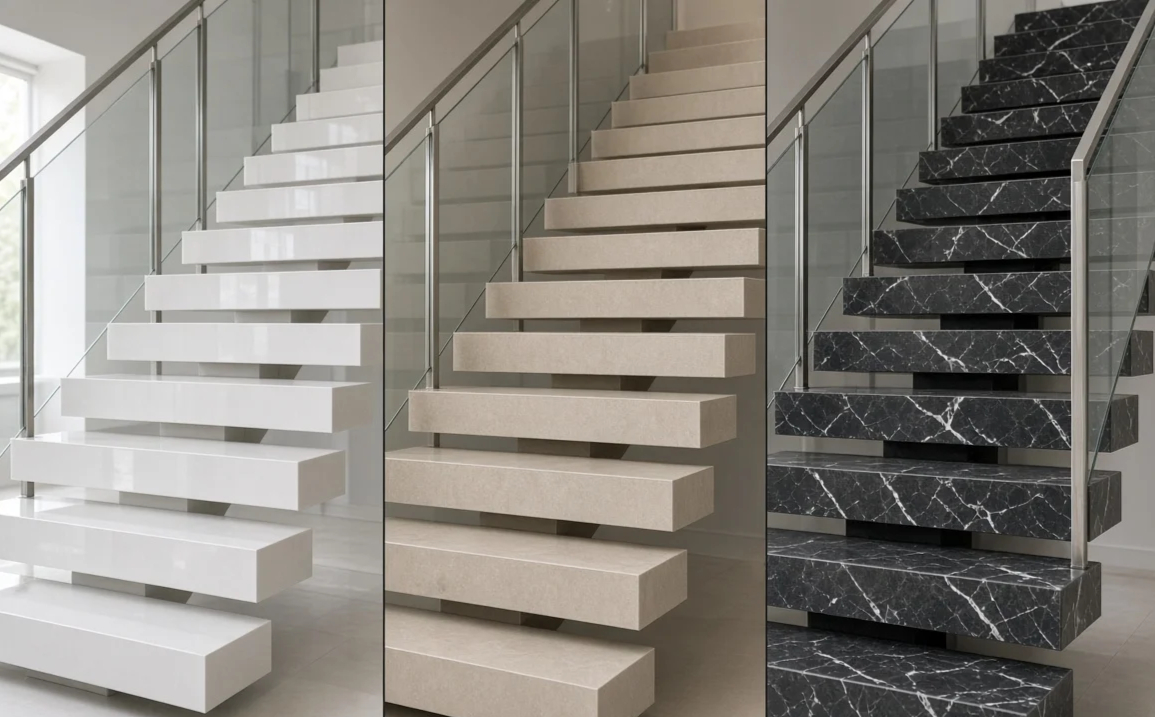
Porcelain vs Ceramic vs Natural Stone Tiles for Stairs: Which Is Best?
Oct 08, 2026 -
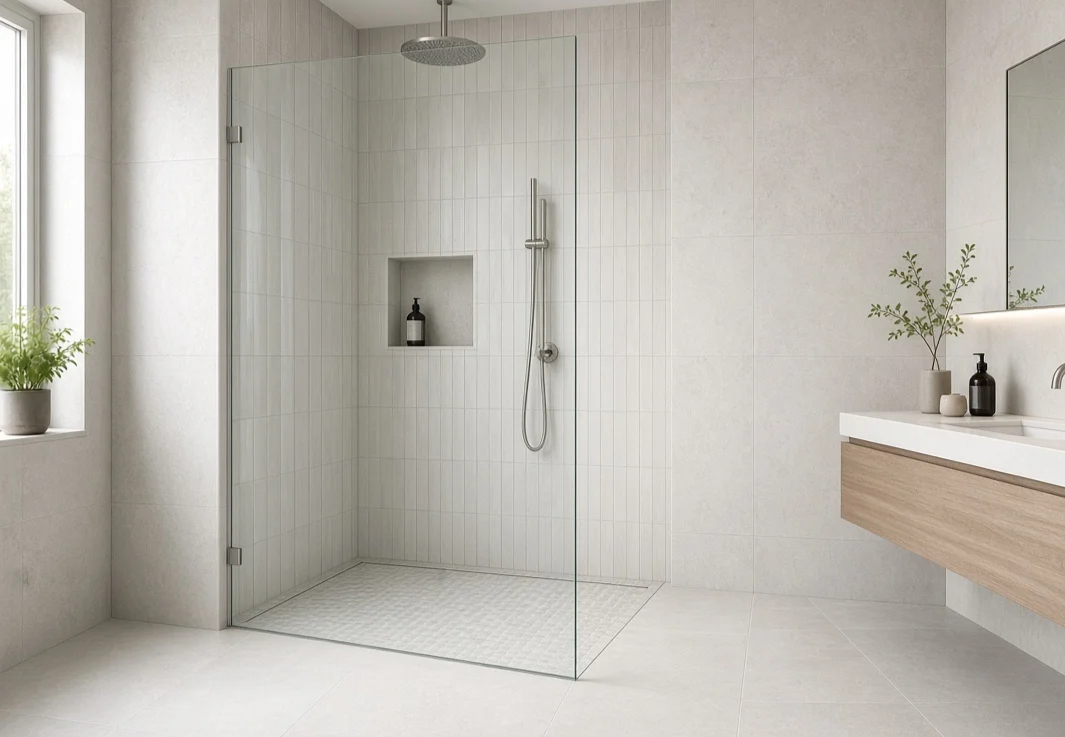
Best Shower Tile for Small Bathrooms: 9 Options That Make the Space Look Bigger (2026 Guide)
Sep 28, 2026 -
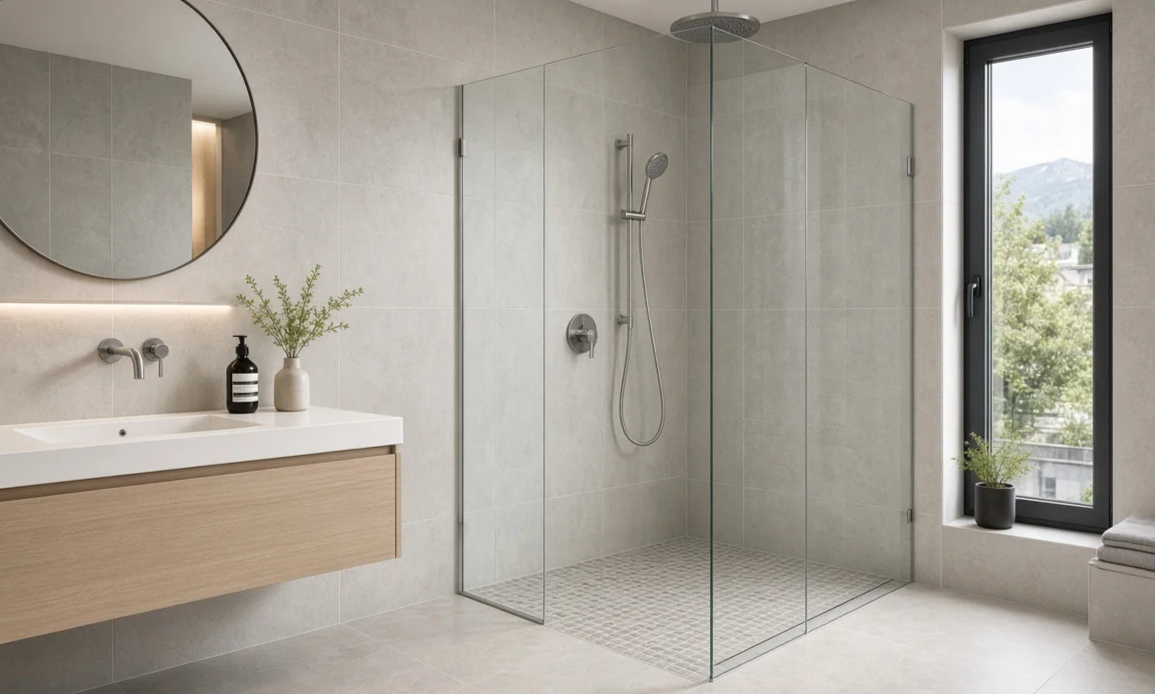
Bathroom Renovation in Switzerland: How Choose the Right Tiles
Sep 28, 2026 -
Outdoor Terrace Tile Installation in Switzerland: Choosing the Right Tiles for Swiss Weather
Sep 03, 2026 -
How to Choose the Right Plattenleger in Switzerland: A Complete Guide
Aug 27, 2026