Porcelain vs Ceramic vs Natural Stone Tiles for Stairs: Which Is Best?
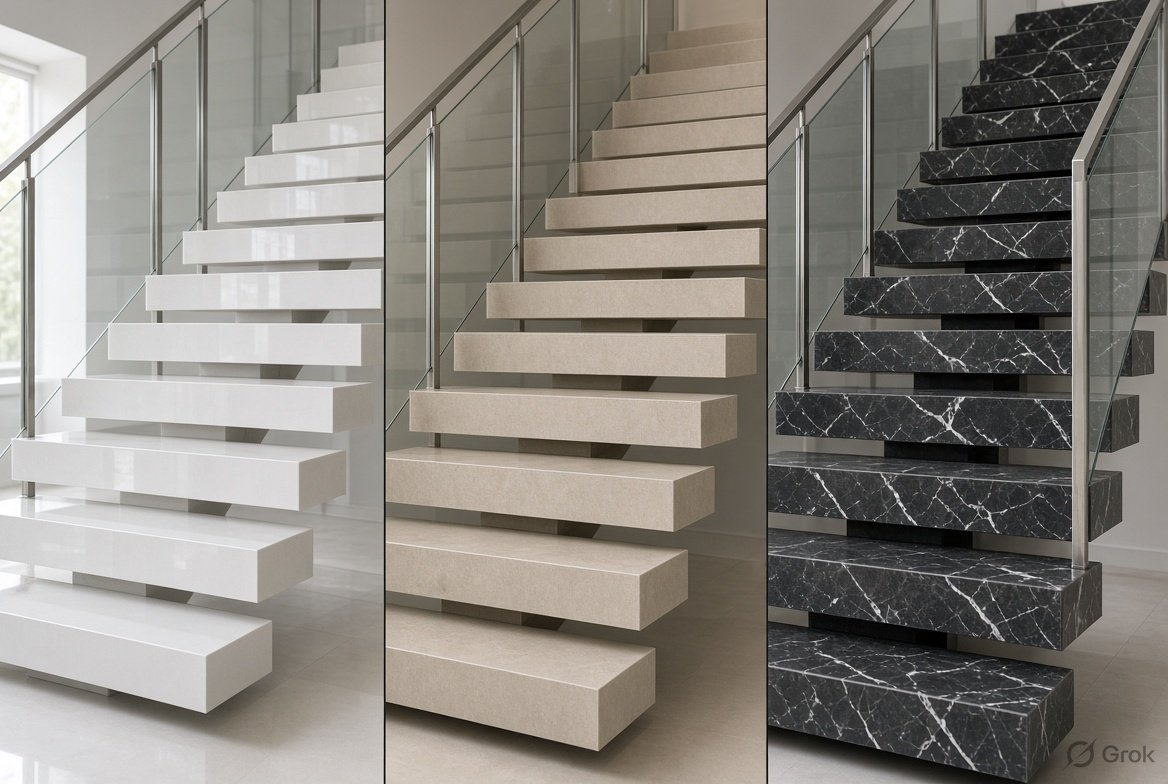
Nothing in your home gets walked on harder than the stairs. Every step takes your full weight, plus grit from shoes and, in plenty of houses, wet boots and frost. So picking the best tiles for stairs is mostly about grip, strength and how the material ages. Colour comes last. Below, we have compared porcelain, ceramic and natural stone so you know where you stand before the first tile goes down.
What Qualities Should the Best Tiles for Stairs Have
Whatever you pick, a stair tile has to tick four boxes.
Slip Resistance.
Look at the R-rating, which runs from R9 to R13. For dry indoor steps, R9 or R10 is usually enough. Wet or outdoor steps need R11 or higher.
Low Water Absorption.
The denser the tile, the better it handles moisture and frost.
Wear Resistance.
The edge of each step takes the most punishment, and the surface has to survive years of daily use.
A Proper Edge.
Matching step tiles or a nosing profile protect the front of the step and make it easier to see.
Now we will measure each material against these four points.
Porcelain Stair Tiles
Porcelain is fired at very high temperatures, which leaves the body dense, hard and close to waterproof. Water absorption is normally under 0.5 percent. That is why porcelain stair tiles cope so well with cold, damp conditions and heavy foot traffic. Matt and textured finishes give good traction, and many ranges come with matching step tiles that already include a nosing.
If you want the most durable tile for stairs, porcelain is usually the answer, and plenty of tilers put it at the top of their list for busy households. The downside is that it is hard to cut, so you need an installer who has done it before.
Ceramic Stair Tiles
Ceramic is made from red or white clay and fired at a lower temperature. The body is softer and more porous, and the colour sits in a glaze on the surface. Under constant traffic that glaze can wear through, and chips are easy to spot.
On the plus side, ceramic stair tiles cost less and are simple to cut. That makes them a fair choice for a cellar stair or a secondary flight that sees little use. For the main family staircase, we would never recommend them.
Porcelain vs Ceramic for Stairs: The Real Difference
The porcelain vs ceramic for stairs question comes down to density and how often the stairs are used. Porcelain is harder, absorbs less water and still looks good after years of traffic. Ceramic is cheaper, but it wears sooner and doesn't handle frost.
If your budget stretches, porcelain is the safer long-term buy for stairs you use every day. If the stairs are seldom used and always indoors, ceramic will do the job.
Natural Stone Stairs
Natural stone stairs have a character that manufactured tiles can't fully copy, because every piece has its own pattern and tone. Granite, slate and some limestones are hard enough for stair use. Granite is one of the toughest options and works inside and out. Slate has a naturally rough surface that grips well. Polished marble is a different story: it gets slippery when wet, so keep it for landings and walls.
Stone also needs more looking after. Most types should be sealed, and some will stain or etch if you clean them with acidic products. Weight and thickness matter too, so have the staircase structure checked first. Budget for higher material and fitting costs than you would with porcelain.
Indoor Stair Tile Options
Indoors there is no frost to worry about, so comfort and looks count for more. The most popular indoor stair tile options are:
- matt porcelain in wood, concrete or stone looks
- fine-textured ceramic for light use
- honed natural stone such as limestone or slate
Choose a finish that grips well in socks and slippers. A contrasting nosing is also worth considering, since it makes each step edge easier to see. Children and older family members benefit most from that.
Outdoor Stair Tiles
Outdoor steps deal with rain, ice, de-icing salt and big temperature swings, so the standards are tougher. Outdoor stair tiles need to be frost-resistant, rated R11 or R12 for slip resistance, and laid with a slight fall so water drains off.
Frost-proof porcelain and granite are the safest choices. Avoid standard glazed ceramic and polished stone outside. Both turn slippery and can crack in winter. Finding the best tiles for stairs outdoors is mostly about grip and frost resistance, so read the technical data sheet rather than trusting the look of the sample.
The Three Materials Compared
- Porcelain: highest durability, a wide range of grip finishes, suitable indoors and outdoors, medium to high cost.
- Ceramic: moderate durability, mainly for indoor use, lowest cost.
- Natural stone: very durable if you choose the right type, a one-of-a-kind look, needs sealing, highest cost.
Why Tile Installation Matters
Even the best tiles for stairs will fail if they are laid badly. The substrate has to be flat, stable and dry. Each step needs full adhesive coverage with no hollow spots, because stairs carry concentrated loads at the edge. Outdoors, flexible adhesive and movement joints help, and a waterproofing layer is a good idea on exterior flights. Edge profiles should be fitted cleanly and level.
A professional tiler checks all of this as a matter of routine, and a good share of the long-term durability comes from these details.
Making the Final Choice
For most homes, porcelain stair tiles are the strongest all-rounder and, properly installed, the most durable tile for stairs of the three. Ceramic stair tiles suit lightly used indoor staircases on a tighter budget. Natural stone stairs make sense if appearance is a priority and you don't mind the upkeep.
For a hallway or an entrance, the right answer depends on how much traffic the stairs get, how exposed they are and what you can spend.
Still unsure which are the best tiles for your stairs? The team at Plattenleger Pro can advise on materials and handle the installation. Visit our website to request a consultation.
Recent Posts
-
Best Shower Tile for Small Bathrooms: 9 Options That Make the Space Look Bigger (2026 Guide)
Sep 28, 2026 -
Bathroom Renovation in Switzerland: How Choose the Right Tiles
Sep 28, 2026 -
Outdoor Terrace Tile Installation in Switzerland: Choosing the Right Tiles for Swiss Weather
Sep 03, 2026 -
How to Choose the Right Plattenleger in Switzerland: A Complete Guide
Aug 27, 2026 -
Large Format Tiles vs Standard Tiles: What Works Best?
Aug 12, 2026