Natural Stone vs Porcelain Tiles: Pros, Cons, and Costs
It needs sealing, and then it needs sealing again. Most natural stone is porous. Marble and limestone especially will absorb spills if left unsealed, and even sealed stone typically needs resealing every one to two years depending on the type and how much foot traffic it sees. Skip this step and you're looking at staining, especially from wine, oil, or acidic foods in a kitchen.
It can be more fragile than people expect. Some stones, marble in particular, scratch and etch relatively easily. Lemon juice or vinegar left on unsealed marble can leave a dull mark that's genuinely difficult to remove.
The price varies wildly and tends to run higher. Cost depends heavily on the type of stone, where it's quarried, and how it's finished, but natural stone generally sits at the higher end of flooring options.
Every batch is different, which sounds nice until it's a problem. If you need to replace a broken tile years down the line, matching the original stone exactly can be difficult or impossible, since quarries change and batches vary.
Porcelain Tiles: Pros and Cons
The Case For Porcelain
It barely absorbs water. Porcelain has extremely low porosity, generally under 0.5%, which makes it highly resistant to staining and moisture. That's a big reason it's the go-to choice for bathrooms, kitchens, and any wet area.
It's tough. Porcelain is dense and hard-wearing, standing up well to scratches, heavy foot traffic, and daily wear. It's a strong choice for busy households, hallways, and commercial spaces.
It doesn't need sealing. Unlike most natural stone, porcelain doesn't require ongoing sealant maintenance. A regular clean is usually all it needs to keep looking sharp.
The consistency actually helps. Because it's manufactured, porcelain gives you predictable colour and pattern matching across an entire floor, and if you need extra tiles later for a repair or extension, matching is far more reliable than with stone.
It's more budget-friendly overall. While premium porcelain can get expensive, especially large-format or highly realistic wood-look and stone-look ranges, the average cost tends to sit below natural stone.
The Case Against Porcelain
It can feel less premium. Even the best porcelain, and some of it is genuinely excellent, doesn't have the natural variation of real stone. To a trained eye, or sometimes just a curious guest running a hand over the surface, it can read as "trying to look like" something rather than being it.
It's heavy and can be tricky to cut. Porcelain's density, the very thing that makes it durable, also makes it harder to cut and install, which can affect labour costs.
It can be slippery when wet unless you specifically choose a textured or matte finish rated for wet areas. Glossy porcelain in a bathroom without the right finish is a genuine safety consideration.
It can crack under serious impact. While it resists everyday wear well, a hard enough impact, like dropping something heavy from height, can chip or crack porcelain, and unlike some natural stones, repairs aren't always straightforward.
Cost Comparison: What You're Actually Paying For
Pricing shifts constantly depending on supplier, region, and finish, so treat these as general guidance rather than fixed numbers.
Natural stone typically runs from mid-range to premium pricing. Travertine and limestone tend to sit toward the lower end of the stone spectrum, while marble and certain slates can run significantly higher, especially in larger formats or with polished or honed finishes. On top of material cost, factor in sealing products, more specialised tile installation, and generally higher labour costs due to the skill involved in cutting and laying natural stone correctly.
Porcelain tile generally spans a wider range from budget-friendly to premium, giving more flexibility depending on what you're working with. Basic porcelain is often one of the more affordable flooring options available, while high-end large-format or designer porcelain can approach or occasionally exceed mid-range natural stone pricing. Installation is typically more straightforward, though large-format porcelain does require an experienced tile installer to avoid lippage and cracking.
The honest answer for most homeowners: if budget is the primary driver, porcelain wins. If long-term investment value and one-of-a-kind character matter more than upfront cost, natural stone earns its price tag.
Maintenance: The Part People Underestimate
This is genuinely where the two materials diverge the most in day-to-day life.
Natural stone asks for ongoing attention. Sealing on a regular schedule, careful cleaning with pH-neutral products rather than harsh chemicals or vinegar-based cleaners, and prompt cleanup of spills, particularly anything acidic. Skip these steps for a year or two and it usually shows.
Porcelain is close to set-and-forget by comparison. Regular sweeping and mopping with a standard tile cleaner keeps it looking new for years, with no sealing schedule to track and far less risk of staining.
If you already know your household isn't great at staying on top of maintenance tasks, that alone might settle the decision.
Where Each Material Makes the Most Sense
Natural stone works well in: low-moisture living areas, entryways, feature walls, fireplace surrounds, and spaces where you want a genuine wow factor and are prepared to maintain it properly.
Porcelain works well in: bathrooms, kitchens, hallways, outdoor patios, and any high-traffic or wet area where practicality needs to come first.
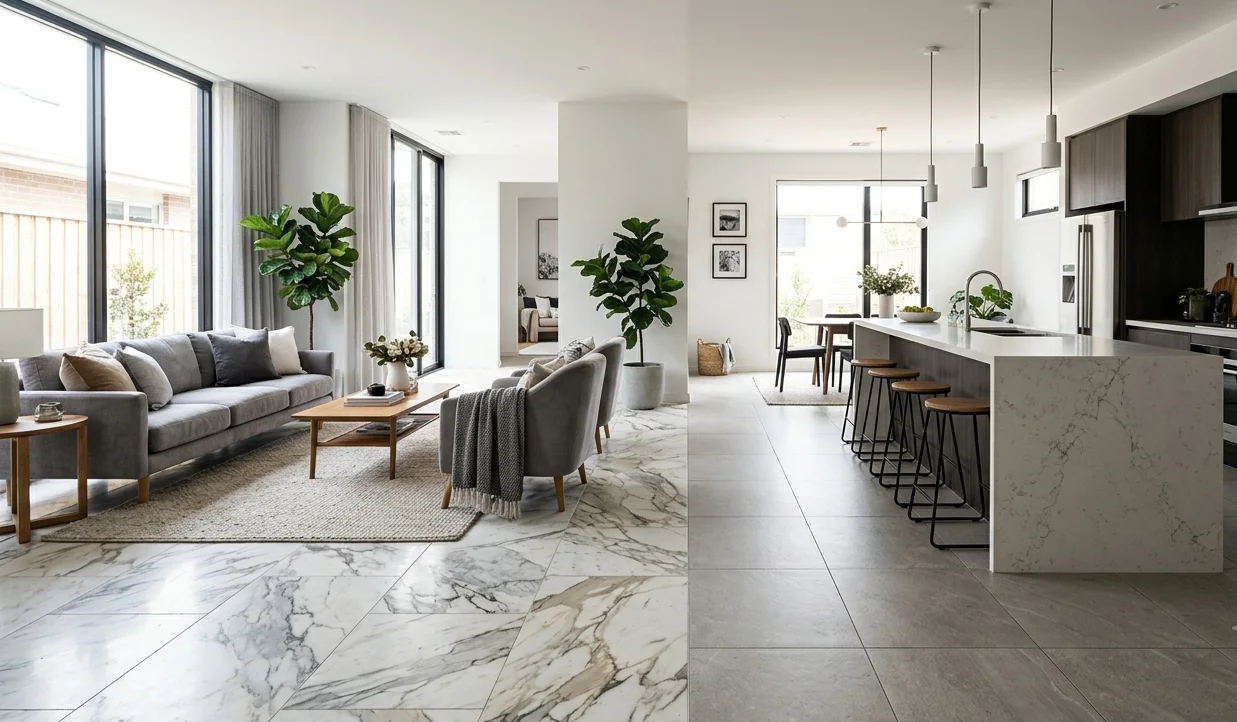
Plenty of homes use both, natural stone in a statement area like an entryway or feature wall, and porcelain in the high-traffic, high-moisture zones where practicality wins out. That combination gives you the visual impact of stone without asking it to do a job it's not well suited for.
Frequently Asked Questions
Is porcelain tile as good as natural stone?
It depends what "good" means to you. Porcelain is more practical, more consistent, and generally lower maintenance. Natural stone offers authenticity and character that manufactured tile can't fully replicate. Neither is objectively better, they're suited to different priorities and different rooms.
Which is more durable, porcelain or natural stone?
Porcelain generally wins on day-to-day durability and resistance to scratching, staining, and moisture. Natural stone can last just as long, or longer, but only with consistent maintenance like resealing. Without that upkeep, stone is more vulnerable to staining and etching over time.
Does natural stone really need to be sealed every year?
Not every stone needs sealing annually, it depends on the type of stone, the finish, and how much traffic the area gets. Many stones need resealing every one to two years, though some denser stones like granite can go longer between applications. A stone supplier or installer can advise on the specific schedule for your material.
Is porcelain tile slippery?
It can be particularly polished or glossy finishes in wet areas. Textured, matte, or specifically slip-rated porcelain is available and recommended for bathrooms, showers, and outdoor spaces.
Which is cheaper, porcelain or natural stone?
Porcelain is generally the more budget-friendly option overall, though premium large-format or designer porcelain can approach the price of mid-range natural stone. Natural stone costs vary widely depending on the type of stone and finish, with travertine and limestone typically cheaper than marble or certain slates.
Can you use natural stone in a bathroom?
Yes, but it needs to be properly sealed and ideally finished with a honed or textured surface rather than polished, since polished stone gets slippery when wet. Many bathrooms successfully combine natural stone with porcelain, using stone on walls or as an accent and porcelain on the floor for practicality.
Does porcelain tile crack easily?
Not under normal daily use. Porcelain is dense and resists everyday wear well. It can chip or crack under significant impact, such as a heavy object dropped from height, but for typical household use it holds up very well.
Can porcelain tile look like real stone?
Recent Posts
-
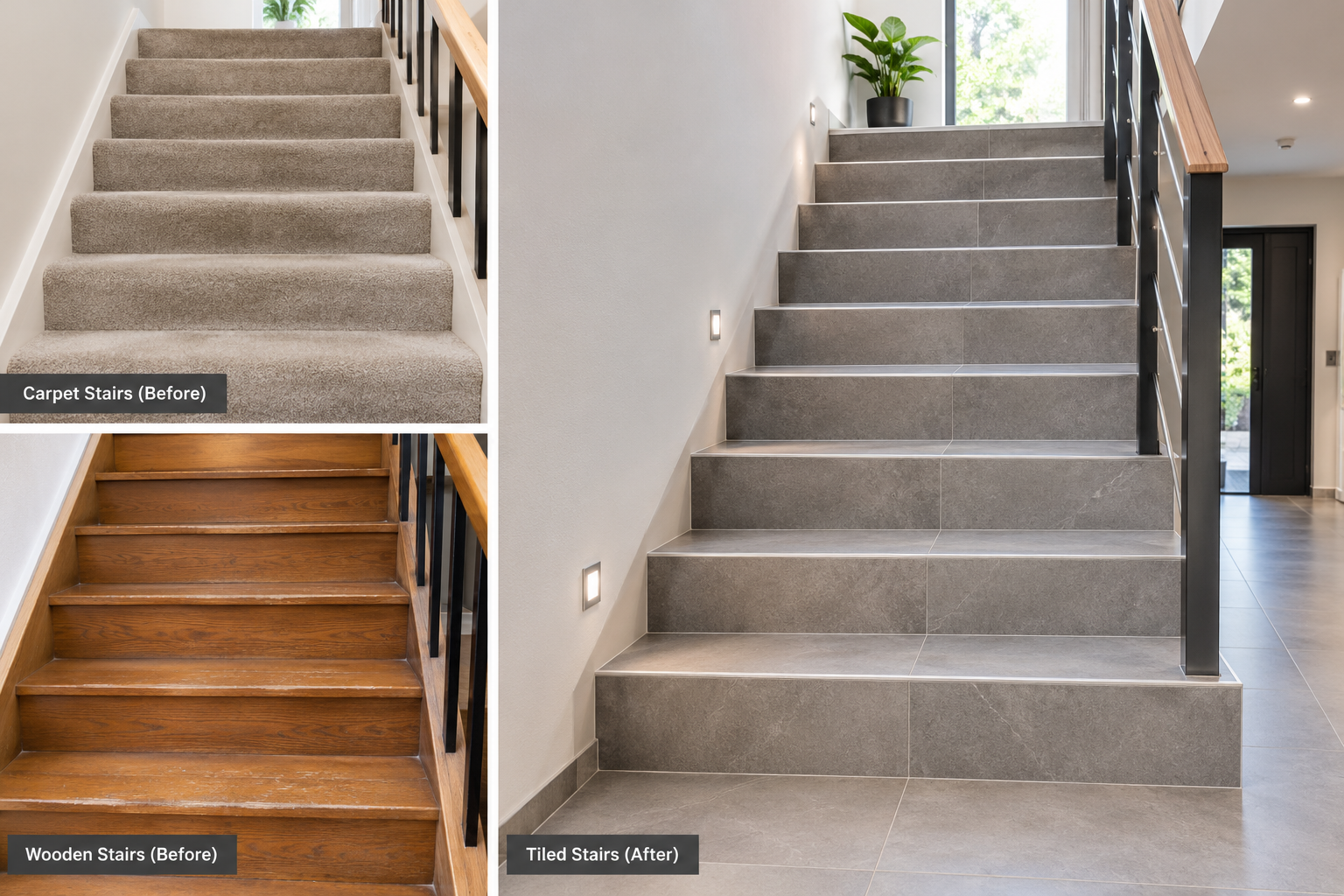
Replacing Carpet or Wood Stairs With Tiles: Is It Worth It?
Oct 19, 2026 -
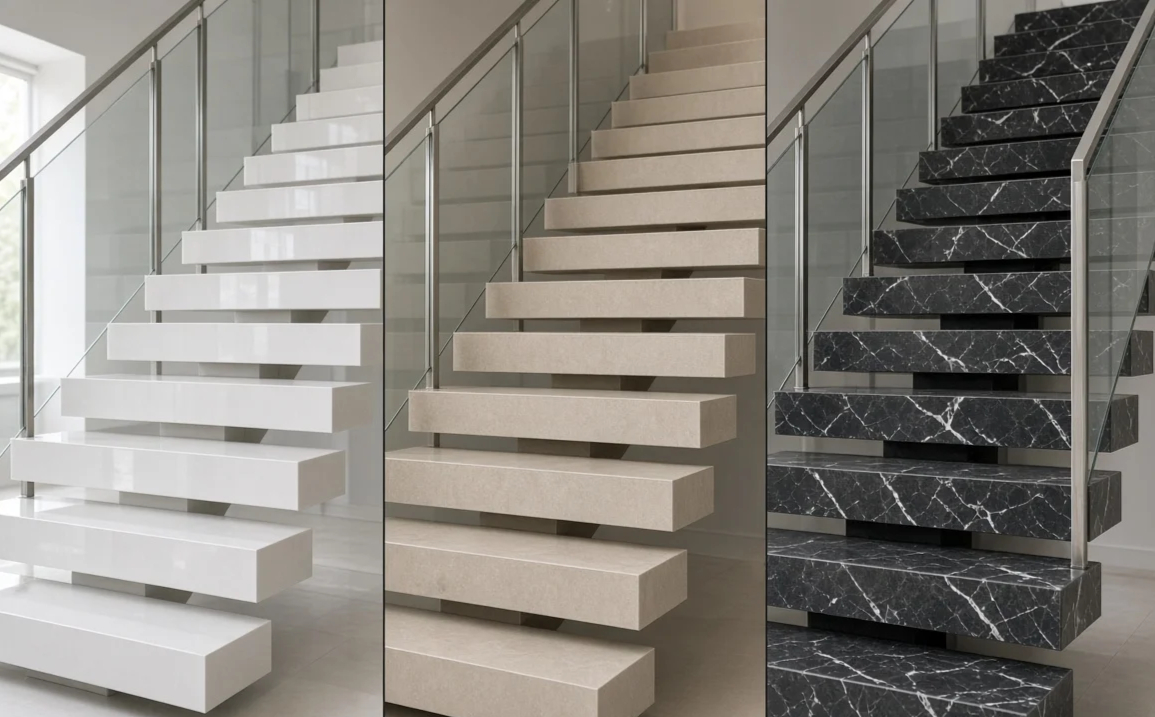
Porcelain vs Ceramic vs Natural Stone Tiles for Stairs: Which Is Best?
Oct 08, 2026 -
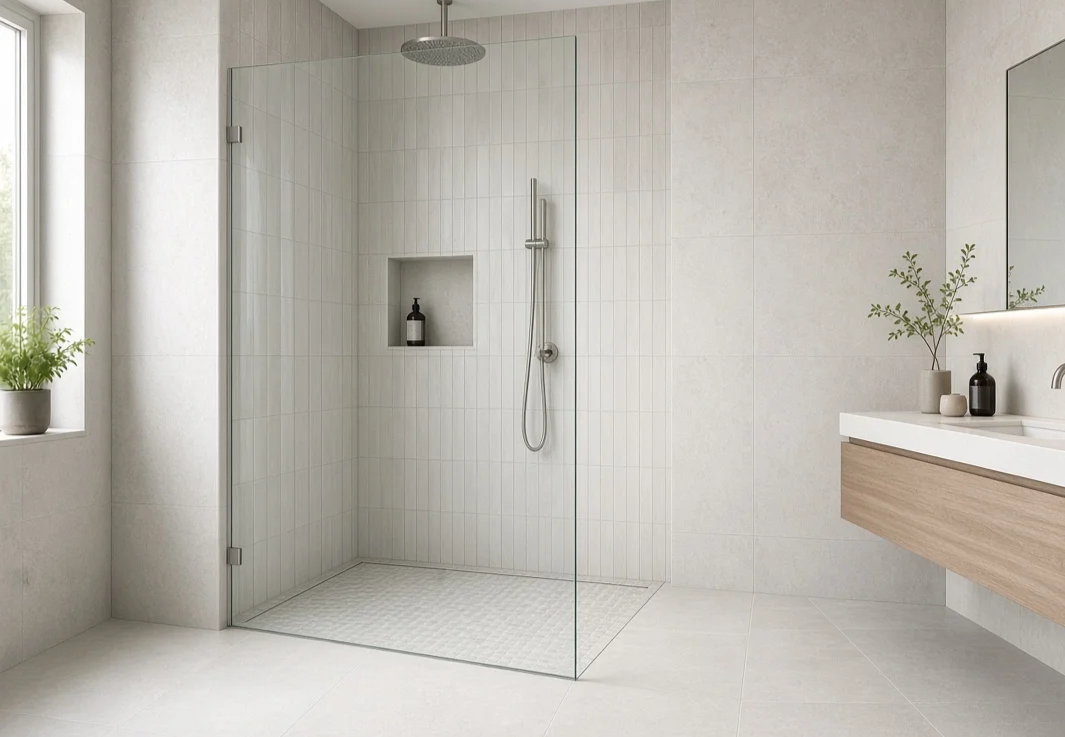
Best Shower Tile for Small Bathrooms: 9 Options That Make the Space Look Bigger (2026 Guide)
Sep 28, 2026 -
Bathroom Renovation in Switzerland: How Choose the Right Tiles
Sep 28, 2026 -
Outdoor Terrace Tile Installation in Switzerland: Choosing the Right Tiles for Swiss Weather
Sep 03, 2026