Outdoor Terrace Tile Installation in Switzerland: Choosing the Right Tiles for Swiss Weather
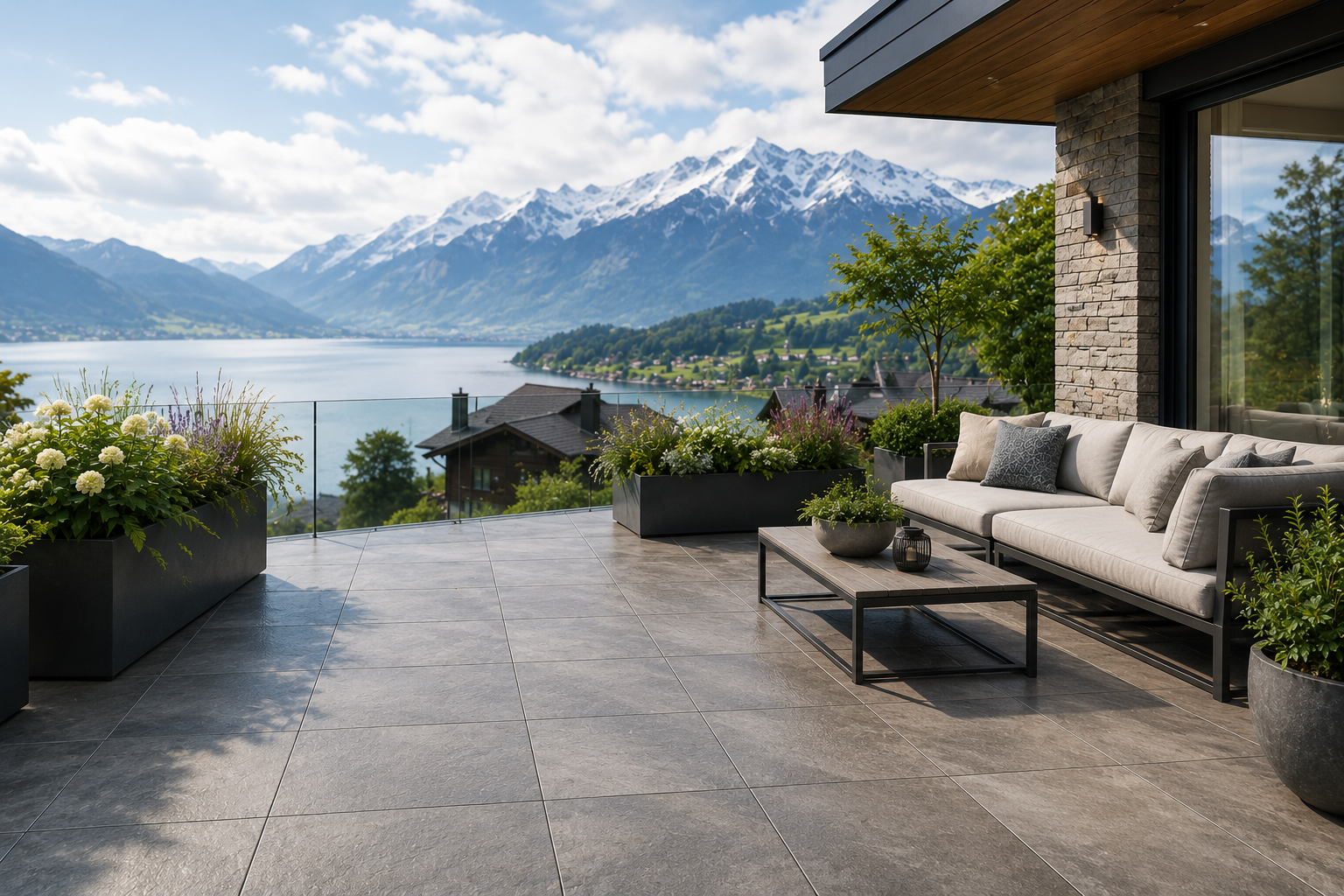
Switzerland is a beautiful country to have an outdoor terrace. It is also one of the most demanding climates in Europe for outdoor surfaces. Temperatures drop well below zero in winter. Snow sits on surfaces for weeks. Spring brings freeze-thaw cycles that crack materials not built for the conditions. Summer brings UV exposure and heat. And in the higher cantons, all of this happens more intensely and more frequently than visitors expect.
For Swiss homeowners and property managers, the question of which tiles to choose for a terrace is not primarily an aesthetic one. The aesthetic comes second. The first question is always: will this hold up?
This guide covers what you need to know before starting a terrace tile installation project in Switzerland, from material selection through to drainage, substrate preparation, and what the installation process actually involves.
Why Tile Material Matters More in Switzerland Than Anywhere Else
The problem with choosing the wrong tile for a Swiss terrace becomes visible within one winter. Water gets into the surface of a tile that is not properly rated for frost resistance. When temperatures drop, that water expands as it freezes, and the tile surface cracks, chips, or delaminates from the adhesive bed beneath it.
This is not an edge case. It is one of the most common outcomes when homeowners select tiles based on appearance alone, without checking the technical specifications against Swiss climate requirements.
The standard to look for is a water absorption rate below 0.5%, classified as E1 or lower under EN ISO 10545. This is the threshold for frost-resistant outdoor porcelain tiles, and it is the material most professional terrace tile installation teams in Switzerland specify as the baseline for any exposed terrace surface.
Outdoor porcelain tiles in large-format sizes, typically 60x60cm or larger, are the most practical choice for most Swiss terraces. The larger format reduces the number of grout joints, which are potential points of water ingress, while still providing enough surface variation for grip in wet conditions. A matte or textured finish is preferable to a polished surface for any area that will be walked on after rain.
Natural stone tiles, including granite and slate, are a workable alternative when a more organic aesthetic is the goal. Both are dense enough to handle Swiss winters when properly sealed, but they require more ongoing maintenance than porcelain and need to be resealed periodically to retain their water resistance.
The Drainage Question: Getting the Slope Right
One detail that separates a well-installed Swiss terrace from one that becomes a problem within a few years is drainage. Standing water on a tiled surface in Switzerland accelerates every form of damage. It finds its way into grout joints. It freezes and expands. It sits against the substrate and eventually compromises the adhesive bond.
The correct approach to terrace tile installation is to establish a consistent drainage slope across the full surface before a single tile is laid. The standard minimum gradient is 1.5% to 2%, directing water toward drainage channels, the terrace edge, or dedicated collection points.
This slope has to be built into the substrate preparation stage, not compensated for during tiling. Once tiles are down, the gradient is fixed. Getting it right from the beginning is what determines whether the terrace stays dry and functional or develops pooling problems that get worse each season.
Surface Preparation: The Work Nobody Sees
The visible result of a terrace tile installation is the tile surface. The durability of that surface depends almost entirely on the work done before the tiles are laid.
For an existing substrate, the surface must be checked for structural stability, any movement, and signs of moisture coming from beneath. Cracks in a concrete substrate need to be assessed and addressed before tiling proceeds. A waterproofing membrane is applied to the substrate to prevent moisture migration from below, which is separate from the drainage gradient managing water from above.
The adhesive used for outdoor terrace tiling in Switzerland needs to be flexible, rated for frost and UV exposure, and specified for the tile format being used. Larger format tiles require full adhesive coverage across the back of the tile to prevent hollow spots, which develop stress fractures under foot traffic and freeze-thaw pressure over time.
Plattenleger Pro handles the full process for outdoor patio and terrace projects across Switzerland, from initial consultation and substrate assessment through to tile selection, installation, and finishing. The team works on residential terraces, hotel rooftop areas, and commercial outdoor spaces in Zurich, Geneva, Basel, Bern, Lausanne, Lucerne, and across the surrounding cantons.
Choosing a Finish That Works Year-Round
The finish of a terrace tile affects both the appearance and the function of the surface across different weather conditions.
A matte or anti-slip textured finish is the practical choice for any terrace that will be used after rain or during winter months when moisture is present. Polished or high-gloss finishes look impressive in photographs and in showrooms, but they become genuinely hazardous when wet and are not appropriate for an exposed outdoor surface in Switzerland.
Wood-effect porcelain tiles have become a popular choice for Swiss terraces over the past several years. They offer the warmth and visual character of timber decking without the maintenance, the swelling in wet conditions, or the degradation that real wood experiences under sustained UV exposure and frost. A well-specified wood-effect porcelain on a properly prepared substrate can give a terrace a completely different character without any of the practical drawbacks of the material it resembles.
For staircase sections connected to the terrace, the anti-slip requirement is even more critical. Step edges and tread surfaces on external stairs should carry a minimum R10 slip resistance rating, with R11 or higher for areas that are frequently wet or shaded.
What the Installation Process Involves
A standard residential terrace tile installation project in Switzerland covers the following stages:
Site assessment — checking the existing substrate, identifying drainage requirements, and confirming the tile specification against the site conditions.
Surface preparation — levelling, waterproofing, and establishing the drainage slope before any tiles are placed.
Tile installation — laying tiles using outdoor-rated flexible adhesive with full back coverage, spacing joints correctly for the tile format and the expected thermal movement in the material.
Grouting — using a weather-resistant, joint-filling grout specified for outdoor use. Joint width and grout specification both affect how the surface handles water and thermal expansion over time.
Finishing and inspection — cleaning the surface, checking joint consistency, and confirming the drainage gradient across the finished installation.
For most residential terraces of 20 to 40 square metres on a sound existing substrate, the full process from preparation through to finished grouting takes between three and six days depending on conditions and tile format.
Getting a Quote for Your Terrace
If you are planning a terrace tile installation project in Switzerland, Plattenleger Pro provides free on-site consultations and detailed quotes across all major Swiss cities and cantons.
Services also cover home interior tiling, bathroom and kitchen tile installation, swimming pool tiling, and staircase work for both residential and commercial properties.
Contact the team at Plattenleger Pro or call +41 77 956 64 22 to arrange a site visit and consultation.
Recent Posts
-
Replacing Carpet or Wood Stairs With Tiles: Is It Worth It?
Oct 19, 2026 -
Porcelain vs Ceramic vs Natural Stone Tiles for Stairs: Which Is Best?
Oct 08, 2026 -
Best Shower Tile for Small Bathrooms: 9 Options That Make the Space Look Bigger (2026 Guide)
Sep 28, 2026 -
Bathroom Renovation in Switzerland: How Choose the Right Tiles
Sep 28, 2026 -
How to Choose the Right Plattenleger in Switzerland: A Complete Guide
Aug 27, 2026